
‘Distributive’ Adjectives!
Distributive adjectives are special words that tell us about a group of people or things, but they always focus on each person or thing individually.
Let’s look at some of the most common ones and what they mean:
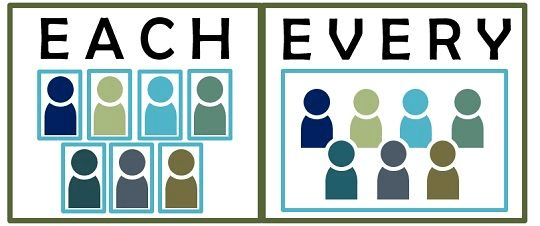
- Each: This word is used to talk about two or more people or things, one by one.
- Example: Each student has a pencil. (This means every student has their own pencil.)
- Every: This word is used when we talk about a group of three or more, and we want to include all of them.
- Example: Every child received a gift. (This means all the children received a gift.)
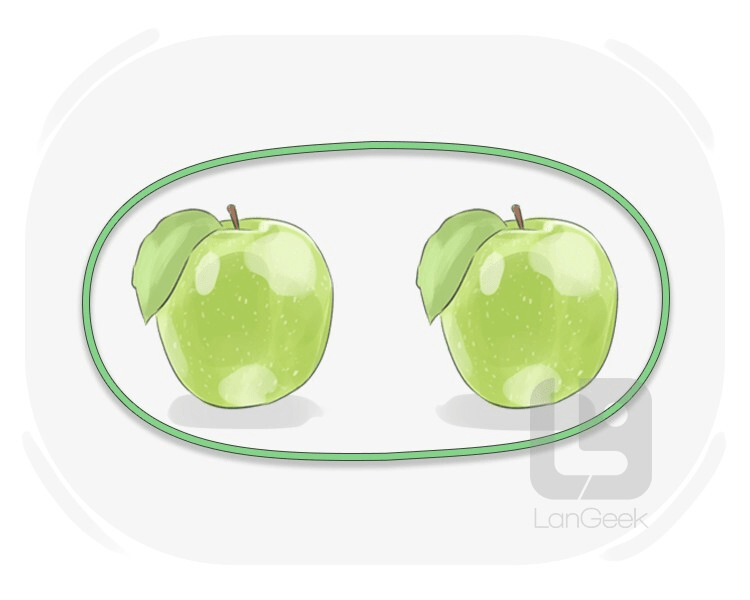
- Both: This word is used to talk about two people or things at the same time.
- Example: Both of my parents are tall.
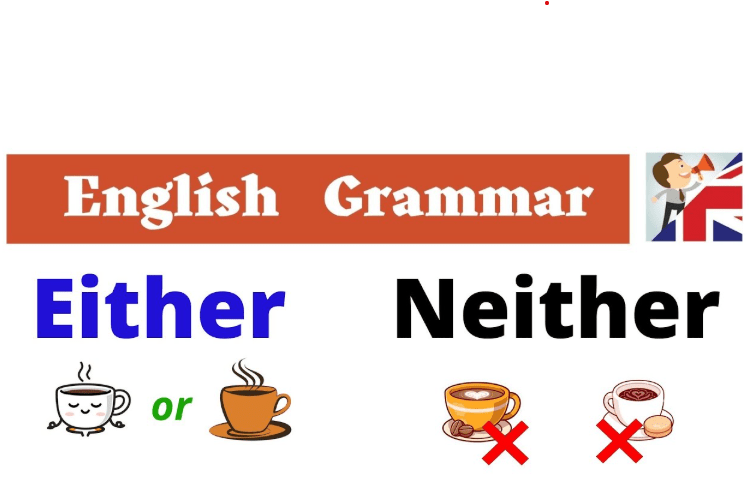
- Either: This word is used when you are talking about two things, and you can choose one of them.
- Example: You can choose either the blue cup or the red cup.
- Neither: This word is used to say that two things are not true.
- Example: Neither of the two boys wanted to play. (This means not one of them wanted to play.)
- Any: This word is used to talk about something without saying which one.
- Example: Do you have any books?

- One: This word is used to talk about a single person or thing in a group.
- Example: One of the girls is my sister.
- None: This word is used to say that not one person or thing in a group is true.
- Example: None of the students came to school today.
Here’s a simple worksheet to practice distributive adjectives, that most students should be able to do without much difficulty:
Here’s a more challenging version, where students need to fill in the blank using their own knowledge of each grammar and its meaning:

 Moselle T's Study Materials
Leave a comment